

For years, ecommerce success meant one thing: ranking well on Google. Nail your keywords, build some backlinks, and you’re off. Job done.
But that’s not the world we’re in anymore.
Now we’ve got AI-powered responses, voice assistants, and large language models (LLMs) changing how people find (and trust) information. And if your strategy is still just SEO… you’re probably missing a big chunk of the picture.
To stay competitive, brands need to think beyond traditional SEO and start working across what we’d call the triad of visibility:
In simple terms, it’s no longer just about ranking for keywords. It’s about becoming a reliable source of information that search engines and AI tools trust enough to reference.
Before we get into the new terms, we need to be clear about one thing - Search Engine Optimisation, it’s just evolving.
In fact, strong SEO is what allows AEO and GEO to work properly in the first place.
Search Engine Optimisation is still the process of helping search engines crawl, understand, and rank your content. Without solid technical foundations, structured content, and clear site architecture, your brand becomes much harder for both search engines and AI tools to interpret.
The difference now is that SEO has become broader than simply targeting keywords.
Modern SEO also includes:
Think of SEO as your foundation layer. Without it, everything else becomes harder.

Answer Engine Optimisation (AEO) is about making your content easy for AI tools to find, understand, and quickly pull into direct answers.
You’ve probably already seen this in action. Someone searches a question, reads the AI Overview or featured snippet, gets the answer they need, and never clicks through to a website.
That’s exactly what AEO is designed for.
Instead of focusing purely on rankings, AEO focuses on making your content:
And this matters because users are searching differently now.
A brand might optimise for “men’s waterproof jackets”, but a customer is more likely to ask:
If your content only targets broad commercial keywords and ignores those conversational questions, there’s a good chance AI tools will pull answers from somebody else instead.

Generative Engine Optimisation (GEO) is where things move beyond traditional search entirely.
AI tools like ChatGPT, Gemini, Claude, and Perplexity don’t simply display a list of links. They generate responses by pulling together information from multiple sources and presenting it as a single answer.
So if your brand isn’t part of that information pool, you’re effectively invisible in those environments.
That’s why GEO focuses less on rankings and more on authority, reputation, and trust.
It’s about:
In other words, you want AI systems to recognise your brand as a reliable place to pull information from - not just another ecommerce site trying to sell something.
Let’s talk about something that’s quietly reshaping everything: zero-click searches.
This is when users get the information they need directly from the search results page without clicking through to a website.
Whether that’s through:
…the research stage is increasingly happening before a user even lands on your site. That means:
That doesn’t mean clicks no longer matter. It just means visibility now plays a bigger role in building trust earlier in the journey.
Your search result has effectively become your shop window. If it answers the question clearly and builds confidence, users are more likely to click through later - even if they don’t do it immediately.

Before diving headfirst into AI optimisation strategies, it’s worth getting the foundations right first.
A lot of brands are rushing towards GEO and AEO without fixing the basics underneath, but the reality is that AI tools still rely heavily on the same signals search engines always have. If your site is difficult to crawl, poorly structured, or inconsistent, it becomes much harder for both search engines and AI systems to understand what your brand actually offers.
The good news? Most of the things that make your site AI-friendly are also just good SEO practice.
We had our brilliant Head of Content on our Marketing vs The World podcast recently, explaining how he makes sure content is AI Ready. You can catch up here.
Structured data, also known as Schema markup, has moved from being a “nice extra” to something genuinely important.
It helps search engines and AI tools clearly understand information such as:
Without structured data, platforms have to interpret your content themselves, which leaves more room for confusion or inaccurate summaries.
Think of Schema as translating your website into a language machines can process quickly and confidently.
And as AI-generated search results become more common, giving search engines that extra clarity becomes even more valuable.
We’re also starting to see brands think more carefully about how AI tools access and interpret their content.
One of the newer developments here is llms.txt, which allows websites to guide AI crawlers towards the most useful or relevant sections of content.
It’s still early days, and it’s nowhere near as established as robots.txt, but it shows where things are heading. Brands are beginning to understand How AI bots Crawl Their Website and realise they may need slightly different approaches for traditional search crawlers and AI-focused systems.
For now, the important thing is making sure your most valuable content is:
Because if AI tools can’t understand your content properly, they’re unlikely to use it.
Site speed might not feel directly connected to AI search, but it absolutely plays a role.
Fast-loading websites are easier for crawlers to process efficiently, which means your content can be indexed, refreshed, and referenced more quickly. Slower sites create friction, and in competitive industries, that can make a difference.
Core Web Vitals are still a useful benchmark here because they measure the overall experience your site delivers, not just for users, but indirectly for search engines too.
And when AI-generated answers are pulling information in real time, freshness and accessibility become even more important.
One of the biggest mindset changes brands need to make is this: Your website isn't just for people anymore. It's also for machines.
Think of your site less like a brochure… and more like an API. AI tools are constantly extracting, interpreting, and summarising information from across the web. The easier your site makes that process, the more likely your content is to be referenced.
That means:
The brands that perform best in AI-driven search are often the ones providing the clearest and most reliable information. Just remember, the easier it is to extract your data, the more likely generative AI search tools are to use it.

AEO sounds technical, but in reality, a lot of it comes down to creating genuinely useful content that answers real questions clearly.
The challenge is that many ecommerce brands still write primarily for keywords instead of users. That approach doesn’t work nearly as well when AI tools are trying to extract concise answers from your content.
The brands succeeding here are the ones making information easy to find, easy to understand, and easy to summarise.
Search behaviour has become much more conversational, especially with the growth of voice search and AI assistants.
People don’t search the way they used to.
Instead of typing:
“waterproof jacket mens”
They’re asking: “What’s the best waterproof jacket for hiking in heavy rain?”
That means your content needs to sound more natural too.
This doesn’t mean stuffing pages with overly casual language or trying to mimic AI prompts. It simply means answering questions in the same way a helpful expert would explain them in real life.
Clear, natural phrasing tends to perform better because it aligns more closely with how users search and how AI tools interpret meaning.
Content structure is so important for AI search engines and although it's simple, it's where a lot of brands fall down.
Even great content can struggle if it’s difficult to scan or interpret!
AI tools favour content that’s well organised because it makes extracting information much easier. That’s why structure plays such a big role in AEO.
Your content structure needs to include:
This isn’t just about helping algorithms either. It improves readability for users too, which usually leads to better engagement overall.
And importantly, if there’s a key question your page is targeting, answer it early. Don’t make users - or AI systems - work too hard to find it.
FAQ content remains one of the simplest and most effective ways to improve visibility in answer-based search.
Why? Because FAQs naturally mirror the way people search.
They allow you to target:
FAQs are your chance to provide short, concise answers that directly answer user queries.
Platforms like “People Also Ask”, Google autocomplete, Reddit, forums, and customer service conversations are all useful places to find the kinds of questions people are genuinely asking.
And when paired with FAQ schema, you’re giving search engines even more context around the content.
This is where things start to move away from traditional “optimisation” and into something a bit broader.
GEO isn’t just about tweaking your website or adding keywords in the right places. It’s about how your brand shows up across the wider internet - and whether AI systems see you as a credible, trustworthy source worth including.
Because when AI tools generate answers, they’re not just pulling from one place. They’re looking at patterns, signals, and reputation across multiple sources. So the stronger and more consistent your presence is, the more likely you are to be included.
We've shared some of the top points below, but for the full guide on GEO and why it’s the future of search click here.
If AI tools are referencing your brand, you’re already in a strong position.
In many ways, citations are starting to play the same role backlinks once did - they act as signals of credibility and relevance. But instead of just helping you rank, they now influence whether you’re included in AI-generated responses at all.
It’s worth regularly keeping an eye on:
Because not all citations carry the same weight. A mention in a well-respected industry publication or a detailed review will do far more for your visibility than a quick mention in a low-quality listicle.
The goal isn’t just to be talked about - it’s to be talked about in the right places.
Experience, expertise, authority, and trust aren’t going anywhere.
AI systems are increasingly designed to prioritise reliable, high-quality information and avoid questionable or low-value content.
That means brands need to demonstrate genuine expertise through:
The more evidence you provide that your content is informed, trustworthy, and created by people who know their subject properly, the stronger your visibility tends to become.
Being discoverable on your own site is one thing. Being talked about elsewhere is another.
If your brand never appears in:
…then AI tools have fewer external signals confirming your credibility.
This is why digital PR has become such an important part of modern SEO and GEO strategies.
It’s no longer just a brand awareness play - it’s a key part of how you build visibility in AI-driven search. Strong third-party mentions help build authority beyond your own platform and increase the likelihood of your brand appearing in AI-generated recommendations.
AI tools don’t just recognise brand names. They also analyse context and sentiment.
That means the overall tone surrounding your brand online can influence whether AI systems present you positively, neutrally, or potentially not at all.
Detailed reviews, strong customer feedback, and positive discussions all contribute to building a trustworthy digital reputation.
And because AI tools synthesise information from multiple places, consistency matters. One excellent review won’t outweigh widespread negative sentiment elsewhere.

It’s also worth remembering that not every AI platform behaves in the same way.
There isn’t a single approach that works across everything, so it helps to understand how each one tends to operate.
The takeaway here is simple: your strategy needs to stretch beyond just your website and into the wider content ecosystem.
Once you start looking at search through this lens, content strategy naturally becomes broader too.
Product pages still matter, of course, but they can’t do all the heavy lifting on their own anymore.
Brands also need:
The goal is to create a strong ecosystem of content that demonstrates expertise and answers questions at every stage of the customer journey.
Because ultimately, AI tools favour brands that consistently provide useful information - not just brands trying to sell products.
We're currently creating a full SEO / GEO / AEO Content Strategy Guide for Ecommerce Businesses. Want to be the first to grab copy? Click here.
SEO, AEO, and GEO aren’t competing strategies. They work best when they support each other.
Traditional SEO still provides the technical and structural foundation. AEO helps your content appear in direct answers and conversational search experiences. GEO strengthens your authority so AI systems recognise your brand as a credible source worth referencing.
And while the technology behind search is evolving quickly, the underlying principle remains surprisingly familiar:
People ask questions.
Platforms look for the best answers.
The brands that succeed will be the ones creating genuinely useful, trustworthy, and well-structured content that helps users solve problems quickly and confidently.
That’s what modern visibility looks like now.
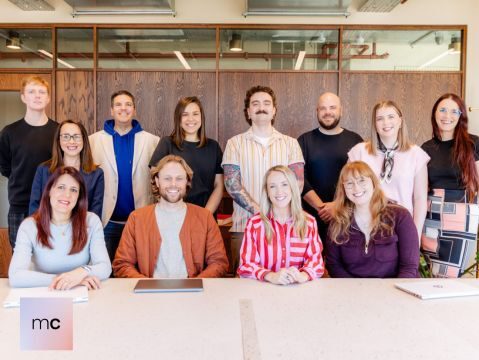
If all of this feels like a lot to take in, you’re definitely not alone.
The good news is you don’t need to completely reinvent your SEO strategy overnight. Most brands already have the foundations - they just need help adapting them for the way search is evolving.
Here at Monday Clicks, we're a content first SEO and GEO agency that helps ecommerce brands:
No scare tactics. No unnecessary jargon. Just practical SEO, AEO and GEO strategies designed for the way people search today.
Sound good? Get in touch.
Get seen. Get chosen.

Subscribe to the Monday Memo
Get the SEO, GEO and AI search updates actually worth knowing, plus practical tips from the Monday Clicks team to help your brand get found, recommended and chosen.
Once a month. All the good stuff, straight to your inbox.
Want in?
By submitting this form I accept the Privacy Policy of this site.


